



From Question to Defensible Decision: 2026 at Remesh So Far
See what’s new at Remesh in 2026, from Remy’s end-to-end AI research capabilities to video interviews, advanced analysis, recruitment, and more
Anthony Lam
September 9, 2026
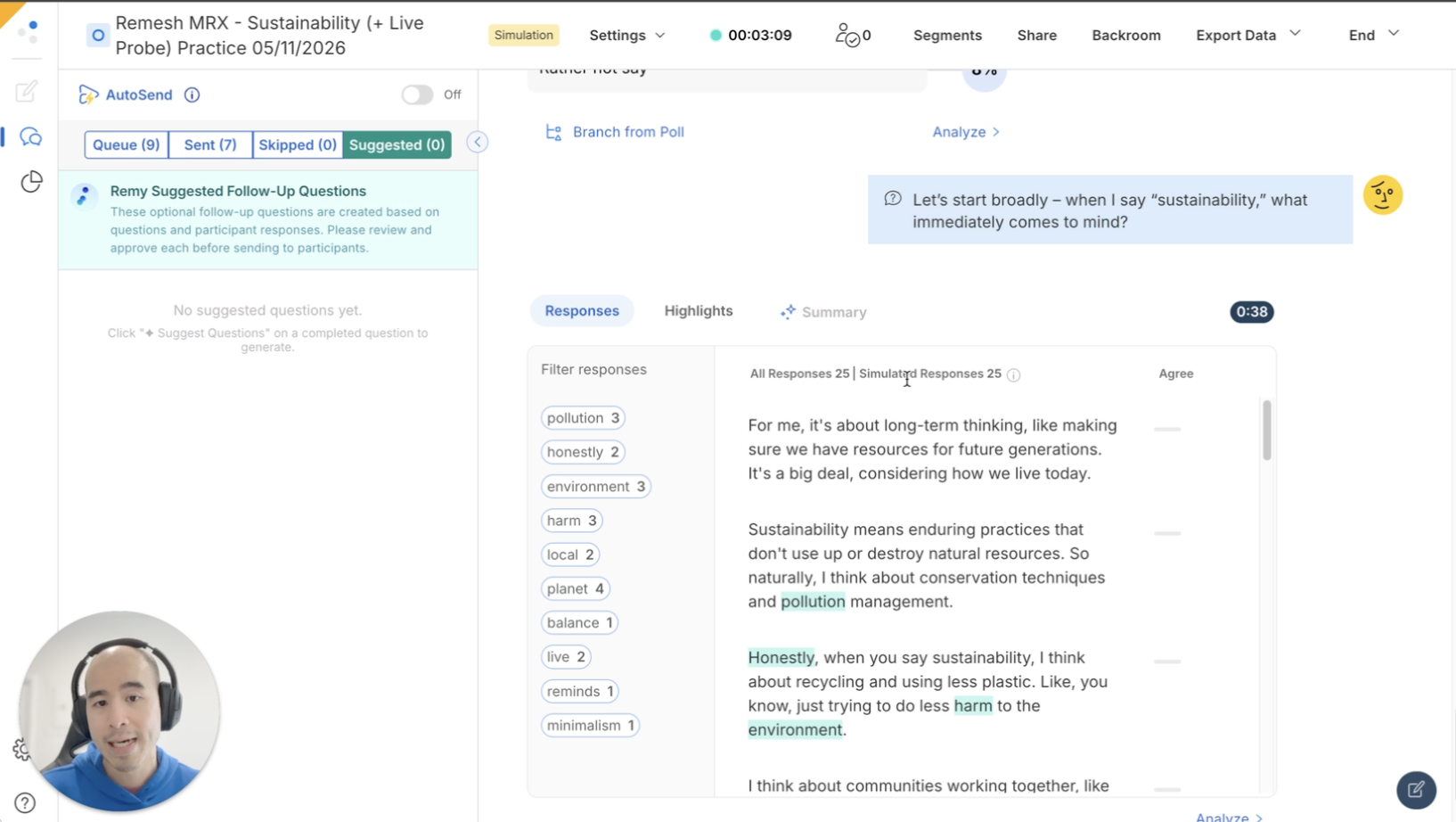

At the start of the year we set one bar for everything we built: make every decision data driven. Not data adjacent, not informed by a summary someone half remembers from a readout. Driven by evidence you can open, click, and check.
Over eight months in and that bar guides almost everything we’ve done. Remy grew from an analysis tool into a research partner that plans, builds, recruits, probes, and analyzes a study from a single conversation. Video interviews picked up the coordination tools of a full research team, and then some. Recruitment got more flexible to ensure that studies keep running. And a long list of the details our customers asked for most, from landing pages to name filtering, got shipped.
Remy: one conversation from research plan to analysis
The biggest arc of 2026 is how much of a study Remy can now carry on its own.
Tell Remy your research goals and it builds the study. Since March, Remy can draft a research plan, walk you through review and edits, and generate a ready-to-use Discussion Guide, all exported to Excel or Word. Since April, you can preview every section, question, and timing in a side panel, ask for changes in chat, and compare versioned files as the guide evolves. It can match the tone of a study you have already run, or reuse a proven structure for a new audience.
.png)
Remy recruits, too. Ask for an audience ("healthcare professionals in New York, ages 35 to 65") and Remy sets up OnDemand Recruit criteria or participant links from the chat, and builds the conversation in one request. Publishing stays in your control.
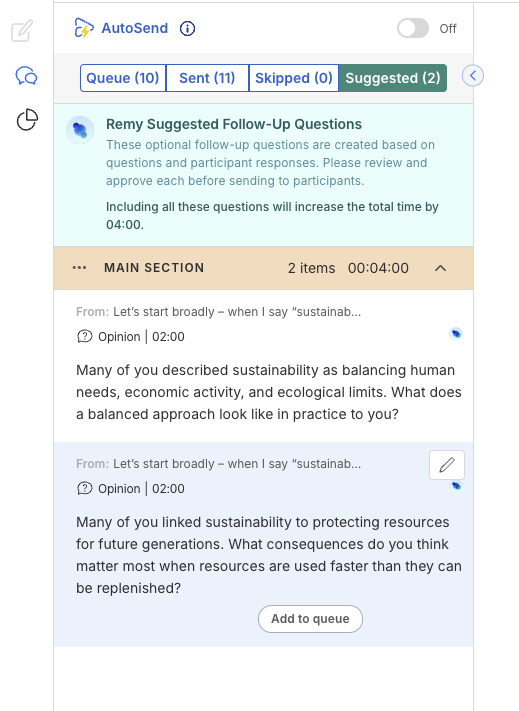
Remy joins you in the Live room. This is the one that changes what a moderator can do mid-session. After an open-ended question closes, ask Remy for one to three follow-up probes, optionally pointed at a focus area like "barriers" or "examples." Review them, edit them, send one now or queue it for later in the section. Nothing goes out without you. Remy Live Probes is the first step toward AI-assisted moderation, and it is already in your hands.
Bring your own context. Upload briefs, prior reports, or discussion guides with Add Knowledge, and Remy reads them alongside your conversation data. Your research materials become part of the analysis instead of something you paraphrase into a prompt.
Under the hood, a new agent architecture made Remy faster across analysis and guide creation, with cleaner tables in answers and better segment retrieval.
Analysis you can defend: crosstabs, significance testing, and PowerPoint export
Every Remy answer has always carried citations back to source data. This year the analysis itself got deeper, and the outputs learned to travel.
Crosstabs and real statistics. Ask naturally ("break down income by gender") and Remy crosses two or three quantitative questions for exact counts and percentages, with segment filtering applied. Then go further: t-tests, ANOVA, chi-square, post-hoc comparisons, and effect sizes, with the test statistic, degrees of freedom, p-value, and assumption checks reported. When the data cannot support a test, Remy says so instead of improvising.
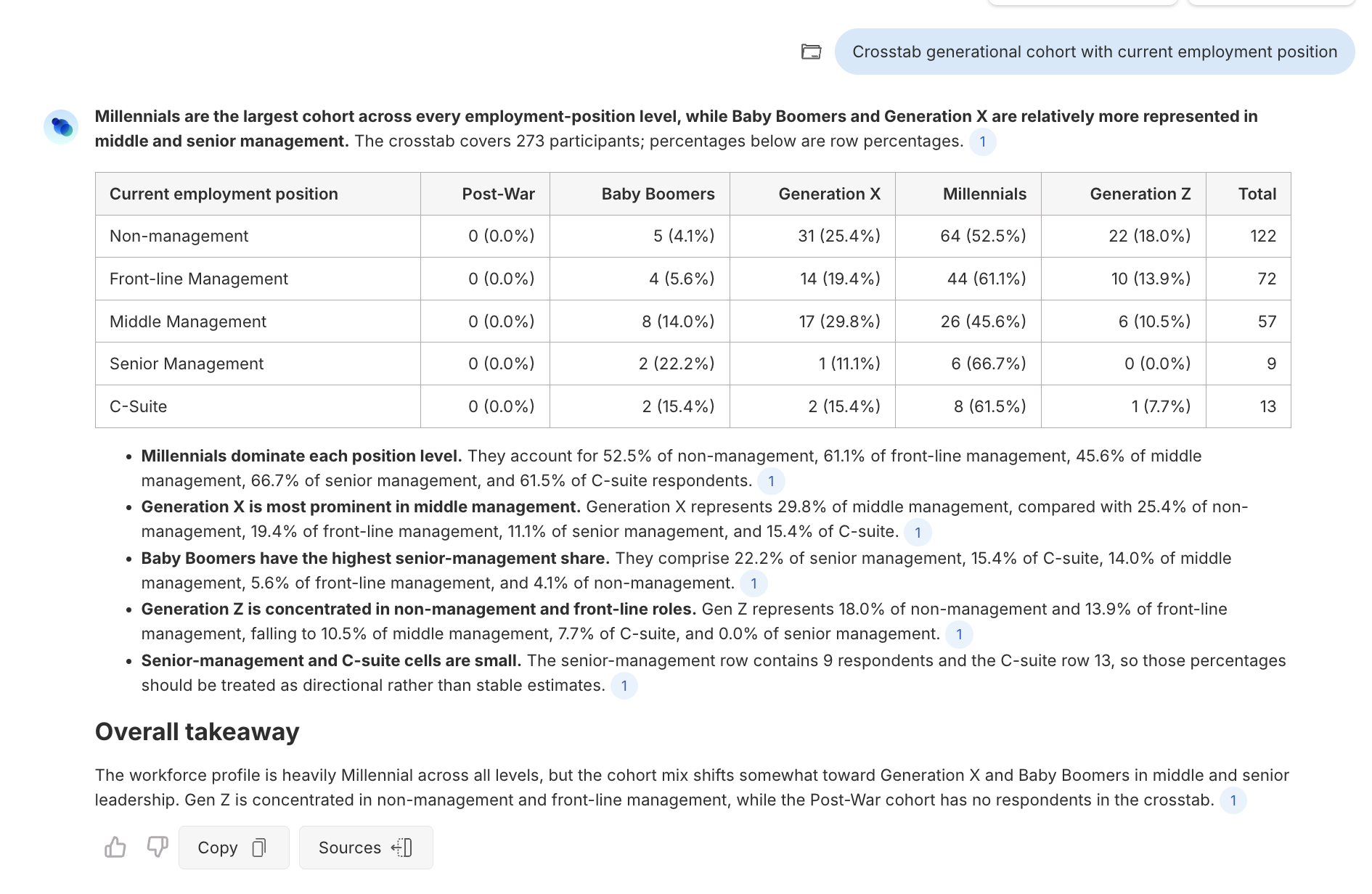
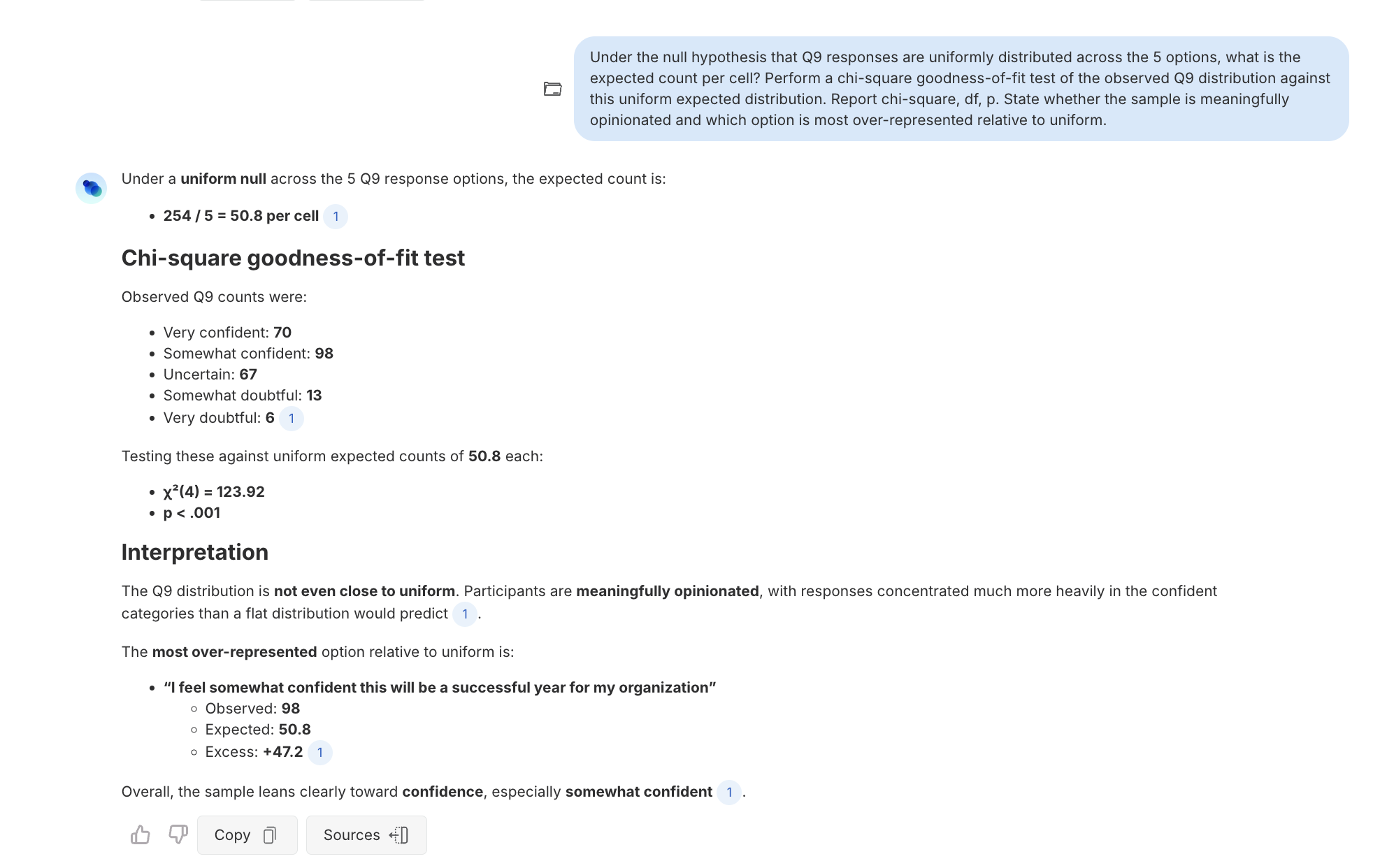
Charts that travel, and now whole decks. Since April, Remy renders bar, pie, and scatter charts inline (picked automatically for the data shape) and exports them as native, editable PowerPoint with Excel-backed data. As of August, ask for a deck and Remy assembles one: single or multiple questions rolled into a thematic or action-oriented PPTX, sources cited, ready to restyle in your own template.

Share the thread itself. Any Remy analysis thread can be shared with a link and password. Stakeholders enter a display name and get a read-only view, refresh for the latest messages, and never need a Remesh account.
Take Remesh anywhere: the Remesh MCP server and live Remy demo
Two doors opened this year. The live Remy demo lets anyone ask questions of real datasets, citations included, no account needed.
And for teams that live in their own AI tools, the Remesh MCP server connects Claude, ChatGPT, Co-Pilot, Gemini or any MCP-enabled client directly to your Remesh workspace. Build conversations, run analysis, and get the same numbered citations you would get in the dashboard, governed by the same authentication, access scopes, and rate limits. Remesh is officially listed in both the Anthropic Claude and OpenAI GPT connector directories.
Video interviews: a backroom, a whiteboard, and anonymous mode
No part of the platform moved faster this summer than Video. The room got a backroom, a whiteboard, mid-interview questions, anonymous mode, and a better sense of its own connection. Analysis got custom themes and a clip library.
A private backroom. Moderators, collaborators, and observers now have a staff-only chat during video sessions, including 1:1 messages, to flag moments and suggest follow-ups while the interview runs. Participants never see it, the public chat is labeled "visible to participants" so nothing lands in the wrong channel, and the logs export after the session.
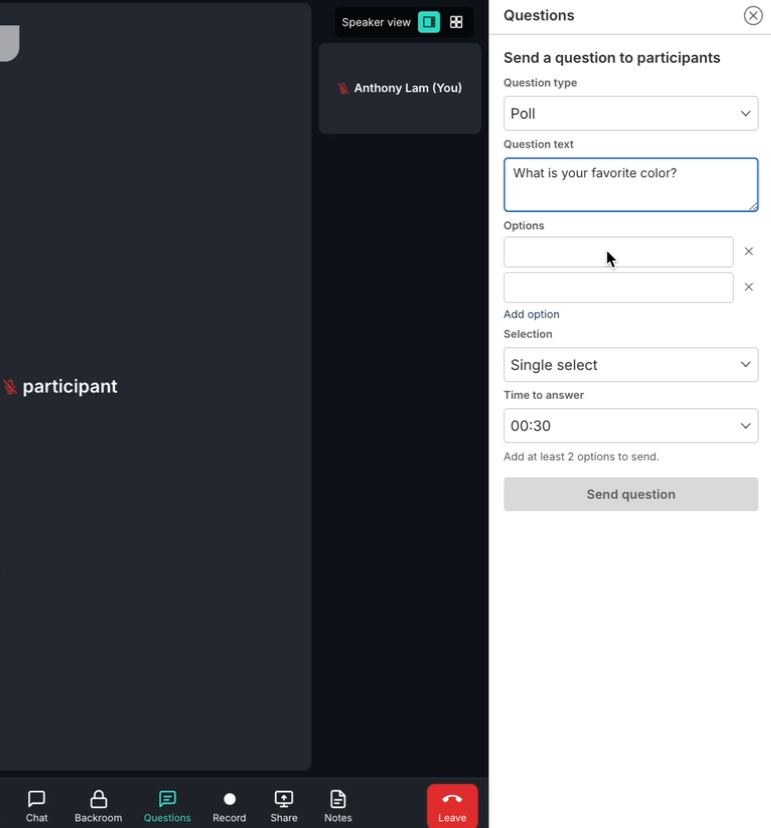
Engage, mid-interview. Send a Poll, Ranking, Ask Opinion, or Ask Experience question to participants during a video session. It appears in the video gallery until you end it, and responses land in Results and CSV exports alongside the rest of the study.
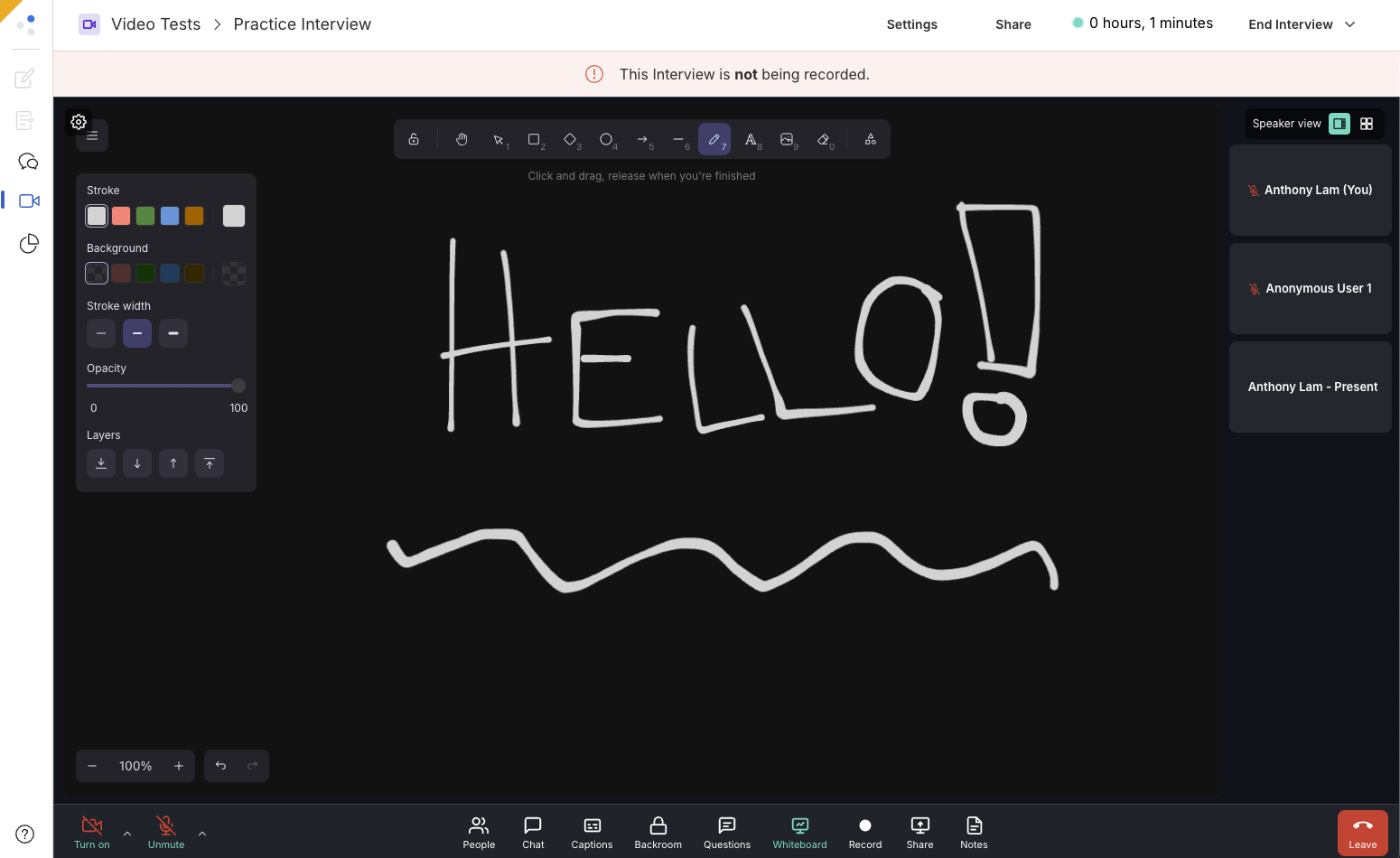
An interactive whiteboard. Open a shared canvas and sketch concepts, react to stimuli, or work through an exercise together. Interviewers and participants can both draw and upload images; interviewers can save the canvas or clear it and start again.
Anonymous by design. Toggle Anonymize Participants on in a room and cameras are off for everyone, no participant name is captured, and the recording is audio only. Sensitive topics and employee research just got a safer space.
Custom themes and clips. Alongside the auto-generated themes, create your own and have matching clips map to them automatically. Cut a clip by timestamp, save theme clips and manual clips together in a Clip Library, and download them individually or combined for the readout.
A room that knows when the connection is struggling. Moderators and participants are notified when internet issues arise, the session throttles intelligently to keep audio flowing, and moderators can download a performance log afterward. Observers also gained control over which audio channel they hear and how loud.
Plus the housekeeping: smoother playback, more reliable rendering, and one-click cleanup of empty interviews.
OnDemand Recruit: quota pauses, feasibility checks, and progress digests
On-Demand Recruit had one goal this year: fewer interruptions in field, and more visibility while you wait.
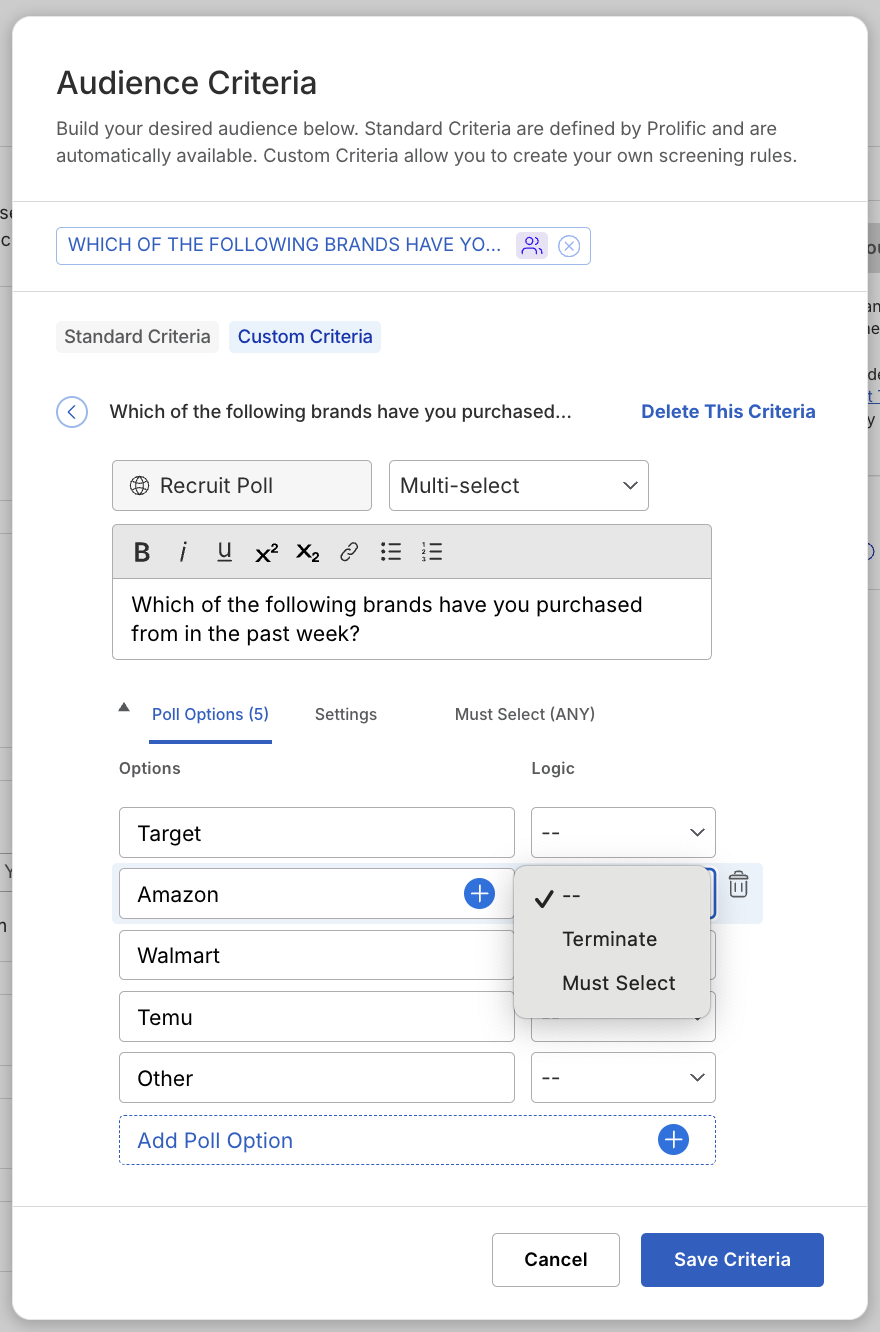
Since March, smarter feasibility checks let healthy studies keep recruiting when small quota groups produce noisy early numbers. Since June, a study that reaches a real quota limit pauses rather than ends: you get an email, adjust or remove the caps, and resume with every screener response intact. A daily digest tracks progress from launch to session start, and your views show qualified participants by default, with screener term-outs split into their own export so the data stays clean.
The details you asked for: participant experience and segmentation updates
Some of the most appreciated ships of the year were the ones customers requested most.
- Custom participant landing pages (our single most-requested improvement): your own welcome, session-full, and session-ended messages, with a live preview as you type.
- Observer access without accounts: share a session with a link and password, with per-session toggles for viewing the guide and exporting data, across Live, Flex, and Video.
- Observers in their own language: in multi-language Live conversations, observers pick a language and questions, responses, and the Analyze panel follow.
- Advanced segments: combine Poll conditions with AND and OR, within a question and across questions, and exclude participants with NOT.
- Participant detail view in Analysis: the full conversation through one participant's eyes, in a single tabular view.
- A name filter for open-ends: like the profanity filter, it catches personal names before submission and prompts the participant to anonymize, keeping responses anonymous by design.
- Participant skip for open-ends: participants with nothing to add can move on after ten seconds instead of waiting out the timer, off by default
What's next: AI-led video interviews and MaxDiff
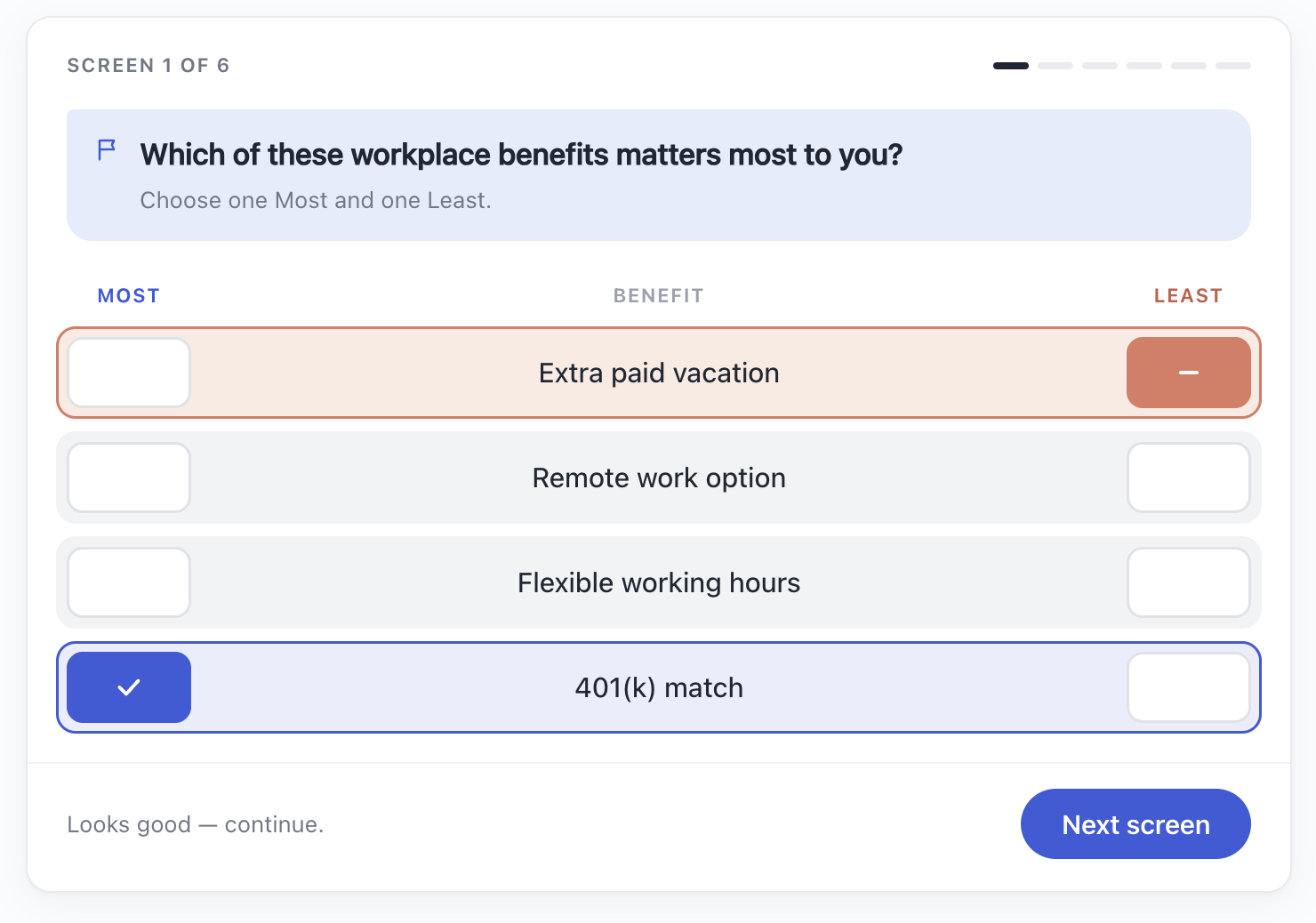
Two things are close enough to name. Planned for October, Remy starts leading 1:1 video interviews itself, with spoken audio and an avatar, Live Probes built in. Human interviewers can pause Remy and step in at any moment. And MaxDiff arrives as a new question type: best-worst trade-offs that turn a long list of 8 to 30 items into a clear priority order, with results in Analysis, exports, Remy, and MCP.

The theme for the rest of 2026 is consistent with the beginning of the year. Remy keeps extending end-to-end, video interviews keep gaining intelligence, and Remesh keeps meeting your data and your tools where they are. The distance between a question and a defensible decision has never been shorter, and we’re still closing the gap.
Want to see any of this live? Try the Remy demo, or request a demo to see to see how the 2026 platform fits your workflow, whether you're running market research or employee listening.
-
Lorem ipsum dolor sit amet, consectetur adipiscing elit. Suspendisse varius enim in eros elementum tristique. Duis cursus, mi quis viverra ornare, eros dolor interdum nulla, ut commodo diam libero vitae erat. Aenean faucibus nibh et justo cursus id rutrum lorem imperdiet. Nunc ut sem vitae risus tristique posuere.
-
Lorem ipsum dolor sit amet, consectetur adipiscing elit. Suspendisse varius enim in eros elementum tristique. Duis cursus, mi quis viverra ornare, eros dolor interdum nulla, ut commodo diam libero vitae erat. Aenean faucibus nibh et justo cursus id rutrum lorem imperdiet. Nunc ut sem vitae risus tristique posuere.
-
.png)
.png)
.png)


